A new WWW
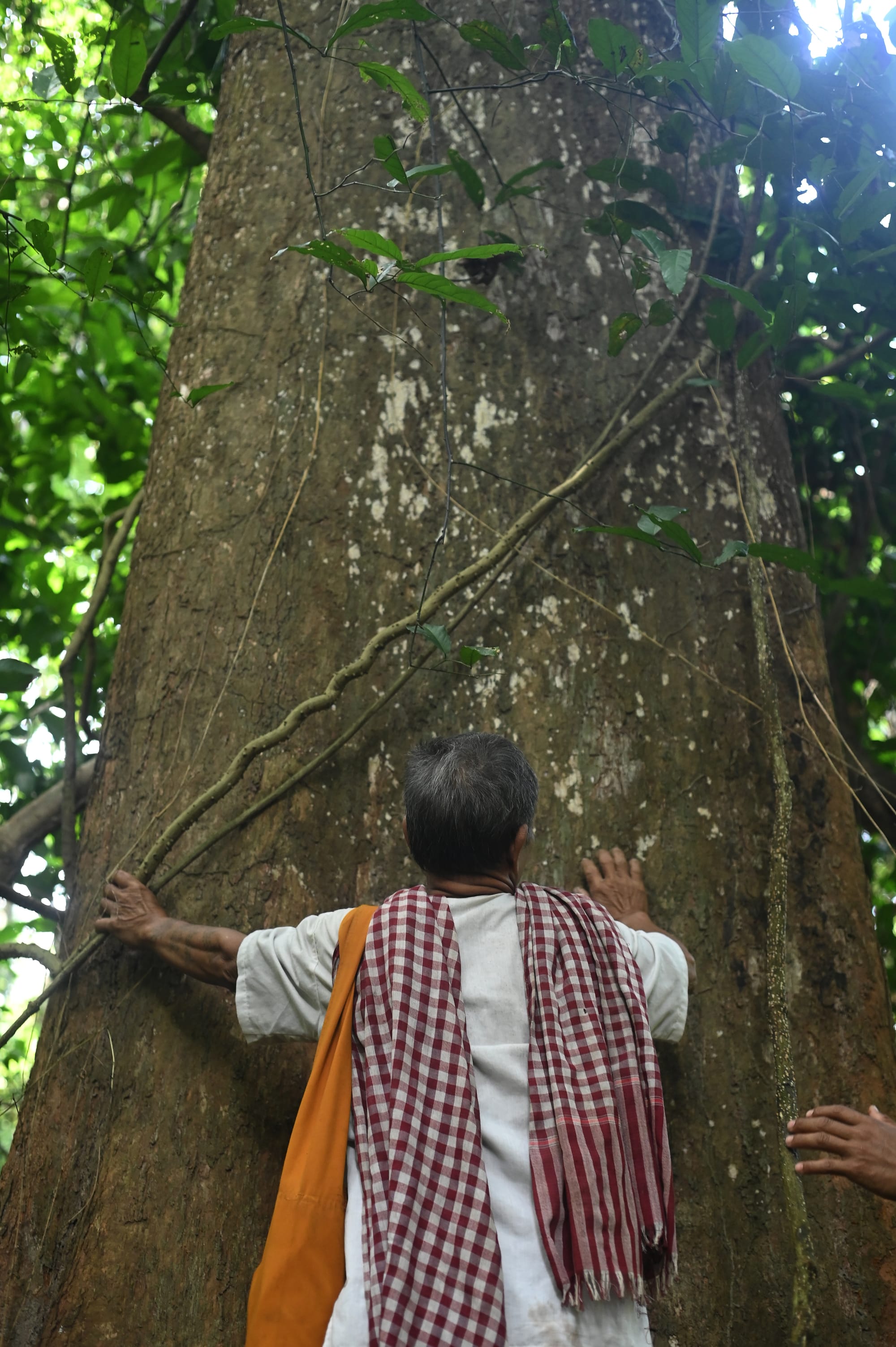
Presenting a little intro for the project 'A new WWW: Whispering Wind Wisdom' as part of my continuing work with the Kui indigenous communities of Kampong Thom and Preah Vihear provinces, Cambodia, and in collaboration with Pardicolor.
Deep Ecology, Object-Oriented Ontology (OOO), and Indigenous Ways of Seeing and Being, while emerging from distinct intellectual and cultural contexts, converge in their challenge to anthropocentrism and their recognition of a more profound interconnectedness between humans and the non-human world. Exploring the resonances between these perspectives illuminates a shared yearning for a more holistic and respectful relationship with the planet, offering potential pathways towards a more sustainable and just future.
Deep Ecology fundamentally questions the human-centric worldview that has dominated our modern society and ideas of development. Its core principle, biocentric equality, asserts the inherent worth of all living beings, regardless of their utility to humans. This intrinsic value, coupled with the recognition of ecological interconnectedness, brings a shift in human consciousness and behavior, advocating for simple living, non-violence, and a deep sense of self-realization that extends beyond the individual ego to encompass the ecological self. Exactly what indigenous people have been living and telling us for centuries.
Indigenous cultures such as Kui often perceive themselves as integral parts of a larger world wide web of life, where humans are not superior but rather one species among many, bound by reciprocal relationships and responsibilities to the natural world. Traditional ecological knowledge, passed down through generations, reflects a deep understanding of local ecosystems and a commitment to maintaining balance and harmony within them. Land is Life, the forest is what allow us to flourish.
OOO offers a complementary perspective, with its central premise of equality between all objects extending beyond living beings to encompass all entities – rocks, rivers, traditional tools and even abstract concepts -- such as Prey Ahret, forest spirit for the Kui. It challenges the privileged position of human consciousness, arguing that objects possess an "inner life" independent of human perception and use, an inherent unknowability, encouraging a humility in our interactions with the world, recognizing the limitations of our understanding and the dignity of all things/beings. Almost like the whispers of the wind that link everything together, the indigenous perspective centered on viewing the natural world as imbued with agency and spirit. OOO's emphasis on the particularity of objects also aligns with indigenous emphasis on intimate knowledge of specific places and species: our existence built on the foundations of connection to land.
What crystalizes all these theories is a critique of instrumentalism, rejecting the idea that nature is merely a resource to be exploited for human benefit, challenging the reduction of the natural world to economic value. We need to shift towards a more relational understanding, where humans are embedded within, rather than separate from, the world-wide-web of life. Embracing the whispering wisdom of the wind as the new WWW that connects us all. This relationality is central to indigenous ways of being, emphasizing kinship with non-human worlds, recognizing animals, plants, and even landscapes as relatives deserving of respect and consideration. What if we see trees as grandmothers? Will the wisdom of ancestry and pure air brought by the wind be a deterrent to cut it down in exchange for new furniture?
This project is an exploration of these topics and their relationship with the ways Kui relate to the forest they call home.
Combining with research on literature about the use and impact of spirituality on conservation projects in Cambodia, and the role of indigenous cultures in the relationship between the country and its nature. E.g. the Kui were the historical ironsmiths of the previous Funan, Chenla and Angkor empires, making swords for its warriors, agricultural tools for its workers and metal clamps that secure the rocks that secure Angkor Wat until this day.
And, more importantly, focusing on the motto of going beyond anthropocentrism towards biocentrism and the belief of inherent value in nature and the interconnectedness of all things, seeing human flourishing as just another natural product to collect from the forest, the source of all food, medicine, shelter, livelihoods and spirituality. The wind whispers wisdom, we just need the humility to listen.
More to sprout soon.