Ancestral Futures
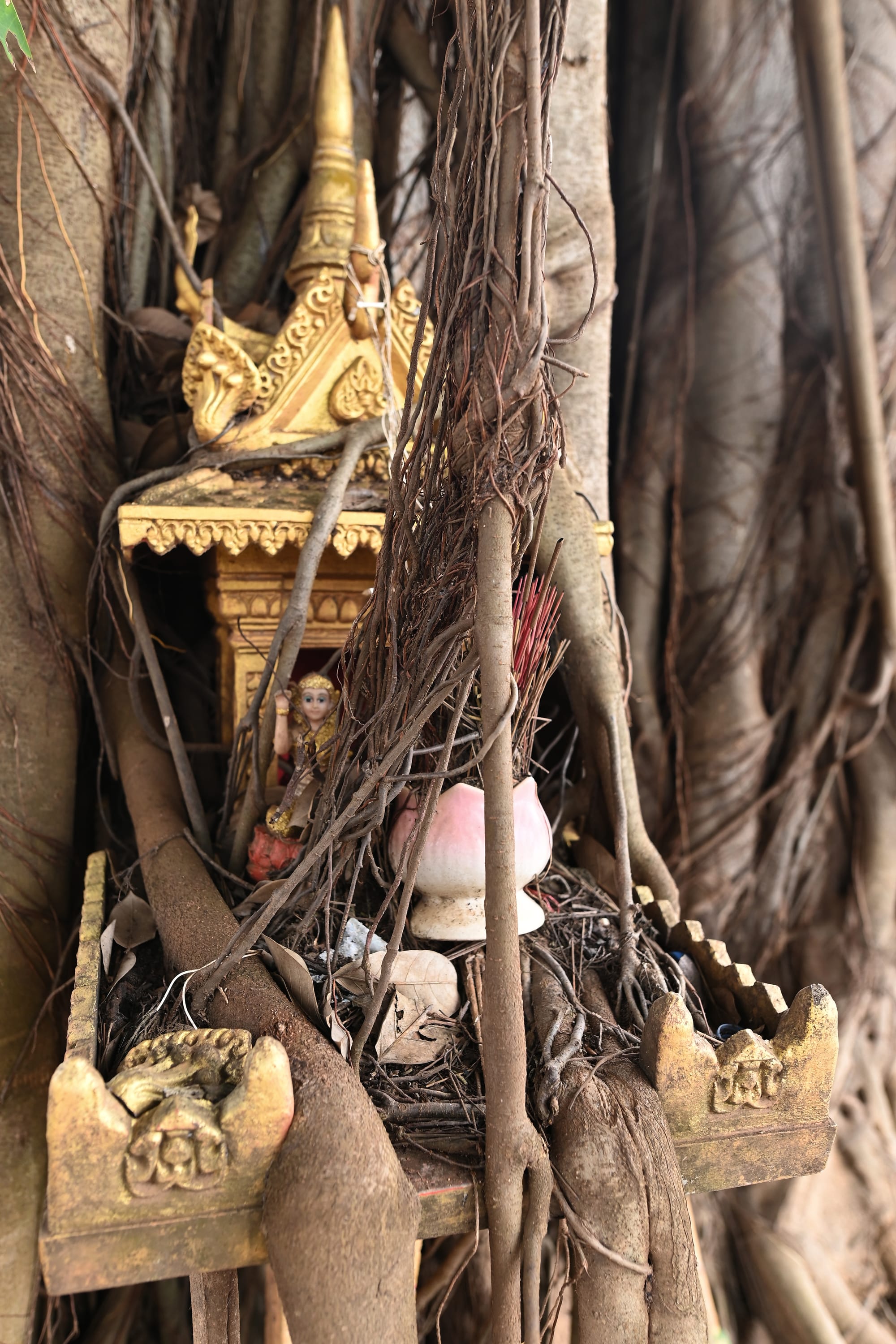
Recognizing the forest, the soil and all its inhabitants as living entities, tapping into indigenous knowledge as a proto-'deep ecology' philosophy that becomes crucial to our survival in pressing times of climate crisis. It is urgent to give more visibility to communities and practices that exist side-by-side with what's non-human, their ancient wisdom of living harmoniously with the nature around us. Although indigenous people represent about 5% of the world’s population, they might help protecting 80% of all biodiversity, with more than 370 million individuals living in more than 90 countries and caring for one quarter of the planet in better ways the rest of the population does.
Cambodia is one of the oldest of these nations, with 24 indigenous groups representing 1.4% of its total population. Among them, the Kui stand fiercely in the current ebbs and flows between rapid development and protection of an already fragile land and its multiple tapestries of ecosystems and livelihoods that depend on them. For instance, in Cambodia, 'ordaining' a tree with monk robes functions as a poetic tool to protect it against illegal logging. The controlled burning to help the sap flows provides the resin that sustain countless families while maintaining the life of the tree, green and breathing in its primordial rhythm, but slowly trapped by the viscosity of increasing rubber farms, once lurking, now galloping faster than the local deers who lack the territory conquered by the thirst for more farming, mining, consuming, buying and selling. But if any creature is Life in itself, if the ground is alive, each tree, each river and the vines and catfishes flowing in their bodies, how to overcome the idea we can trap this force in shiny little boxes, neatly plastic-wrapped ready for the check-out counter and for the take-away container?
How to go back to walk inside the forest and feel ancestry as earth itself, see indigenous presence not only as enriching our collective cultural and ethnic landscape but as the grandparents of our existence, the grandchildren of the world we are currently letting fade away? As said by Ailton Krenak, one of the main voices in defence of Indigenous peoples’ rights on a global scale, "The future is ancestral."
More will be shared on this rhizomatic blog about the Kui, also part of a collaborative project with the Pulitzer center to empower the indigenous youth to document their own knowledge, a sort of crowdsourced library of stories and Kui wisdom.