Composting the old ways
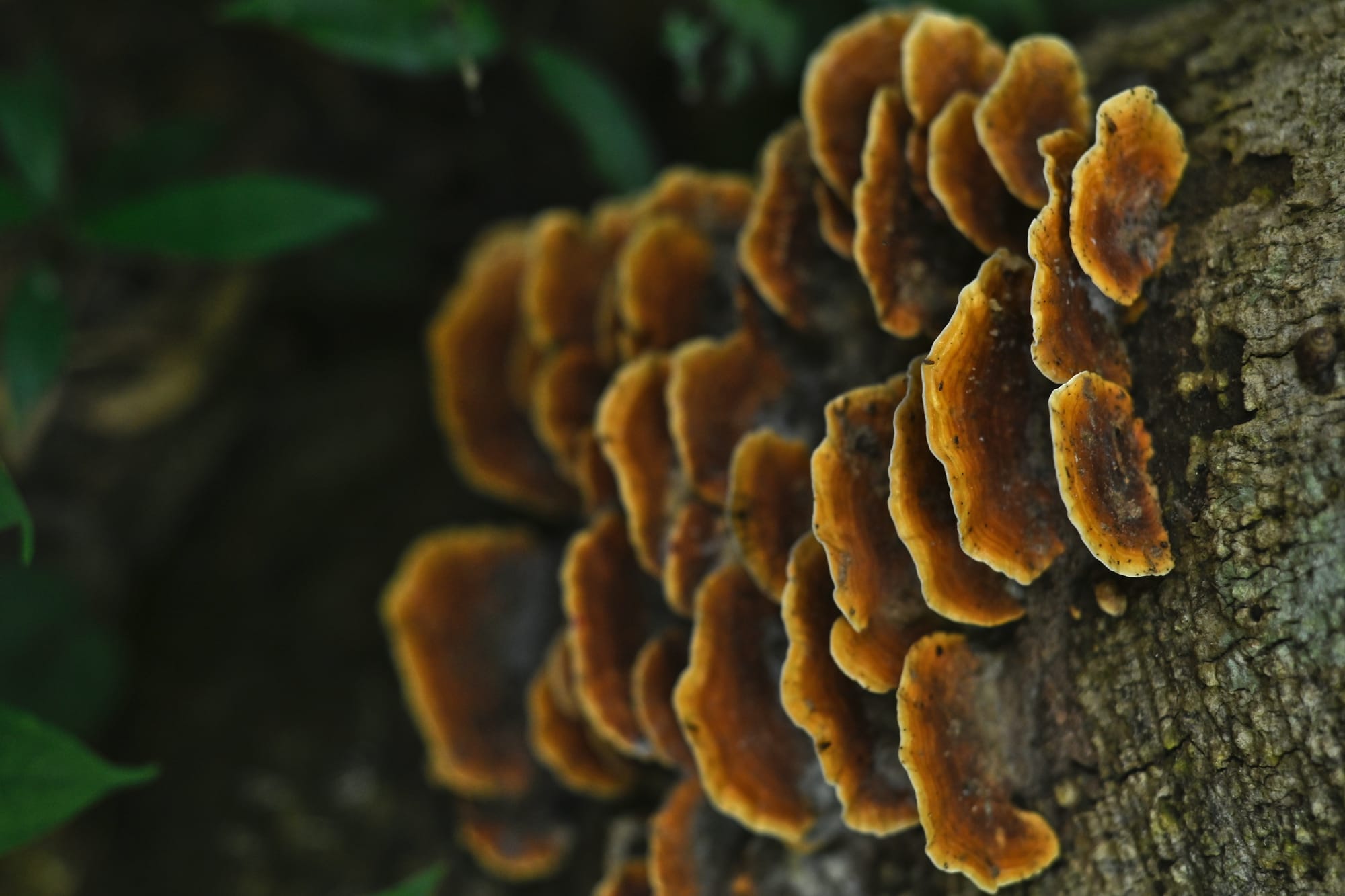
What if we could use fungi as metaphors for re-thinking our world?
It's known by science that the secret ingredient for restoring the world’s forests are fungi, with its underground networks being fundamental to help trees and the whole ecosystem to thrive. The symbiosis with roots and exchance of nutrients can stimulate the plant growth by 64%, with mushrooms being a sign of reproduction of some types of fungi: the fruiting bodies of the underlying mycelium. Carrying water and nutrients, spikes of electrical potential (information) and rooting/connecting everything to the ground. They can even be used and re-purposed as alternatives to plastic packaging and construction material, but that's a diversion from the purpose of this network of stories focused on nature not as resource but rather as an entity in itself (that we are part of.)
There is a variety of fungi expressing different forms of being. The parasitic ones, existing only with another living host to 'steal' food from — perhaps a metaphor and lesson of biomimicry, using the current systems as advantage to progress to better worlds. How could we harness the existing infrastructures and modes of operating to subvert into higher degrees of organizing our work, lifestyle and consumer society to be in harmony with nature, more sustainable and respecting of all living beings?
On the other hand, the saprophytic fungi live as fundamental recyclers, breaking down dead organic matter to get nutrients — metaphorically composting the decaying world to feed the new. Indeed, if there is a lesson in nature is that everything functions as a cycle, outputs of some systems are inputs for others, with this distinction made clear in the industrialization of our society. In the old days, farmers would use organic fertilizer 'gifted' by the animals they domesticated, consumers would never throw something way and always find uses to re-purpose waste. In nature there is no garbage per se.
Finally, mycorrhizal fungi are the ultimate connectors, the little living straps forming the symbiotic relationships of the mycelium networks and all the plants — the new metaphorical WWW born out of collaboration and mutual aid. The Kui use the word Aeltey, or holding hands, as the defining principle of life in the village where everyone helps each other out not out of favor but just as the default mode of operating in the world.
The ecosystem depends on all three types of fungi, as we might depend on these three methods of change as society: subverting, composting, collaborating. We still have to live within the current systems, use them as food and fuel while trying to break free and move forward, composting the old ways of seeing/being in search for the new, and crucially, working together to build community in the process. We, as active part of the ecosystem, need to function more like these rhizomes. Some even say it might be the brain’s most convenient way of representing reality, perhaps mimicking the natural way nature organizes itself?