fungi or fungwe?
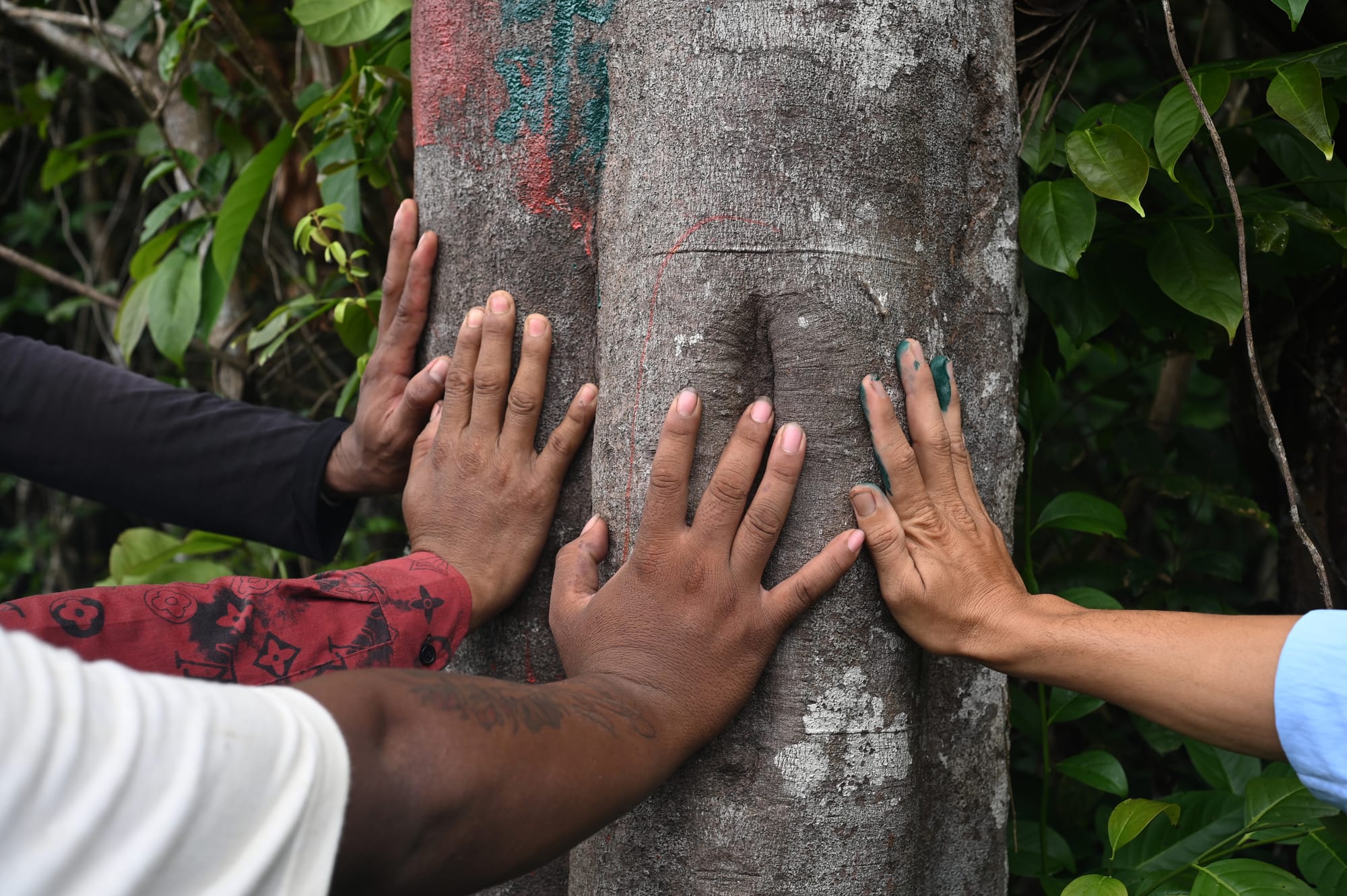
What would happen if we take serious the idea that we live in a animated world, not a background for our own human theatre?
Kin as the simple recipe of seeing others, humans and more-than-humans, as equal participants in the grand unfolding story(ies) that is life itself. How can we reclaim forms of being ourselves and existing in the world without limiting other's (including non-human) potential to thrive?
In times of nostalgia for what's being lost, what could be the steps from longing to belonging?, from engaging more without withdrawing from the current fight. Gently trying to stay with the trouble, grieving but also celebrating collectively, organizing in a more kincentric way, decentralizing leaders because we don't need more heroes. We need more mycelium.
Not only in terms of truly collective action, but also in considering the ecosystem and all its living components around us. Asking questions like how is this species or landscape affected by our actions and the polycrisis around us? How are they adapting or what new ways of thinking and doing can they offer? What would a river want? What would a mountain patiently tell us if we care to listen? How could all these voices be included in our processes of decision-making, project-building, society-organizing? Perhaps using mycelial thinking as analogy for more holistic and systemic ways of seeing the world: interconnected and decentralized, based in co-creation and always expanding further to all directions, flexible and not following a linear story line.
What oneiric realities can we craft together, everyday life and imaginaries holding hands even with shifting sands below our feet? Resilience in the practice of continuing. Together. How to keep moving, trying, living — not expecting utopias but acting with them as assumption. Nowtopias is what we can co-create, carefully, in messy but blessed ways — as children playing or a pollinating bee. While exploring paths towards better futures, and cultivating kin with what’s around us, what if we would try to become-bee? What does it mean beeing around, moving pollen in exchange for sweetness? Each project a flower waiting, each flight a new collective adventure? Moving beyond our ideas of modernity towards an abundant world, based in relationality and reciprocity, in inter-being and co-becoming.
Following what Otto Scharmer calls cultivating the social soil in this time of technological revolutions and existential convolutions, social soil as in "the relationships, awareness and shared sensemaking from which all visible social systems grow. When the social soil is healthy — when trust runs deep, when shared reality holds, when people can communicate and sense together and act from it — everything above ground flourishes. When the social soil is depleted, no amount of structural reengineering can compensate. Structures become hollow. Coordination fails. Conflicts and wars increase. The system eats its own foundations. (...) Just as industrial agriculture replaced the diversity of the living soil with chemical fertilizers and crop monocultures — productive in the short term, devastating over time — the current AI moment is producing an epistemic monoculture."
We need more rhizomatic paths, not single ways of moving forward. Future-forward pluriverses instead of the present curses.
"Three symptoms summarize this condition: Anomie is the erosion of our moral norms, the collapse of our ethical behavior. Atomie, the breakdown of social bonds into loneliness and polarized echo chambers, is the collapse of the relational web of connections on which society depends. Atrophy is the gradual loss of the deeper human capacities needed to create, converse and collaborate in ways that embody our humanity. It is the collapse of agency itself, both individual and collective. (...) Our economic institutions must move beyond mere shareholder value, the perfect expression of mono-epistemic intelligence. They currently treat nature, humans and our own attention as commodities that can be extracted and depleted."
The ecological crisis is the mental health crisis is the housing crisis is the meaninglessness crisis is the economic crisis is the loneliness crisis is the biodiversity crisis is the individualism crisis is the climate crisis. All issues interconnected and emerging from our self-imposed exile from the natural world, the invented binary of society and nature, the breakdown of all relationality in our shared existence. We must believe more imaginative worlds are possible, amidst this poverty of the human mind.
And, of course, none of this is necessarily new. Countless cultures all around the world used to flourish within their own version of social soil. For instance the idea of sumak kawsay in various South American countries, often translated as buen vivir, or good living/the plentiful life. Being, most crucial, not entirely human focused: sumak translates from Quechua language as the beautiful fulfillment of the planet. It is the basis for all life, seeing ourselves as positioned within nature, instead of outsiders trying to control it. The ecosystem as someone alive, to be respected and lived-with, instead of a resource waiting to be extracted. Countries such as Bolivia and Ecuador are deviating their political systems so much from the western-capitalist model of accumulation, and re-centering in their native traditions, that are some of the few that inscribed in their national constitutions the rights of nature. A mountain, a river or a forest can have the same legal framework as a company has, with people able to become proxies to sue whoever is destroying them. If a enterprise can be a person, why not the tree, the body of water, the pollinating bee – all forming the basic elements that provide foundation for whatever economic system our idea of society builds on top of them. Instead of this growth at all costs, it focus on community living, collective care and participatory decision-making. Myceliums of mutual aid and communal support, very much as the concept of aeltey from the Kui community in Cambodia for instance. Respecting diversity of views and cultures, similar to the pluriverse concept explored in another text in this rambling rhizome. Sometimes is okay to co-exist with contradictory ways of being without trying to resolve them within a single path moving forward. The fungi networks underground expand sideways and outwards, they don't try to be a root supporting one single trunk rising vertically towering others.
It's important to note that paying attention to Indigenous knowledge systems do not mean romanticizing or idealizing a specific group of people, themselves with their own possible contradictory cultures and immersed in the overall oppressive systems that surround us – with the inevitable consequences for the relations and cultures that used to nourish them. The soil (social and otherwise) taken away from them. But they were the ones who created wisdom through intimacy with the natural world, embedded in place. Flesh in the real world, not only mind in excel sheets and project proposals. They are the ones bearing witness to most of what is happening to our planet and the first responders in the ongoing fight. And, at the same time, still trying to weave back their ancestral practices to their current realities. The ones reminding us of harmony with the whole.
The balance between feeling well and thinking well, resulting in doing well. And thus, living well.