HOOOME
Exploring one of the three main concepts that helped sprout this collection of ramblings, let's talk ooo: object-oriented ontology. A theory mostly present in the artworld in recent decades, it is focused on the idea of humility from us, humans and observers, towards all the things in our surroundings. Contrary to many (mostly western) philosophers discussing the metaphysics in their armchairs – lots of people would gain from put their feet on grass for a change – it rejects the notion that objects exist only for human perception, that they wouldn't exist without this relation. As wikipedia, that rhizomatic world of knowledge, states: "For object-oriented ontologists, all relations, including those between nonhumans, exist on an equal ontological footing with one another."
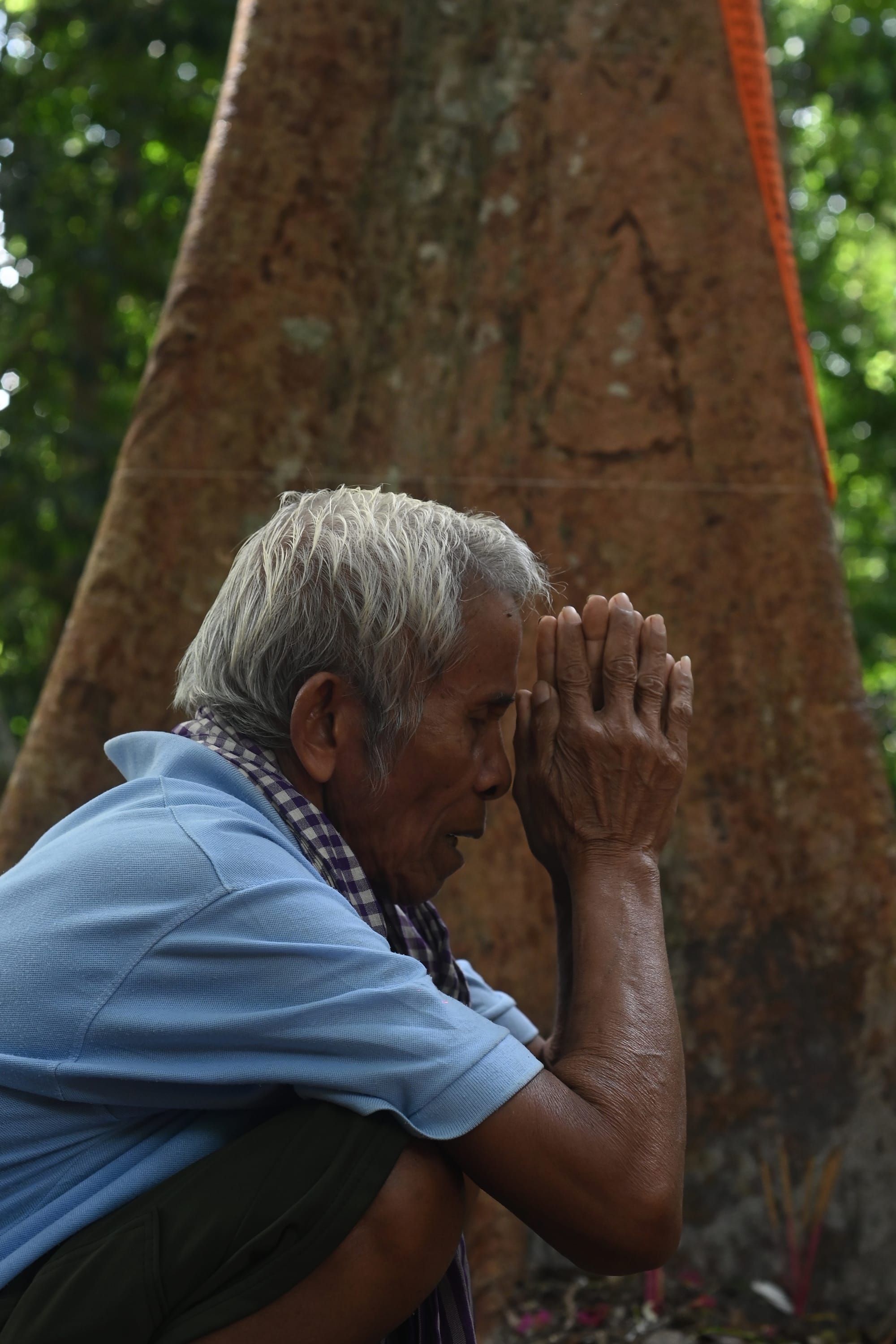
Nature existing independent of human thought; but also, a tree doesn't need to think in a human way to be valuable, she needs to think in a tree way. It's time to get rid of anthropomorphic ways of seeing the world, always attaching value to how much other being relates to our own experience, e.g.: dogs express human-like emotions so we care for them, insects not so much...
And if we view her in light of time, she is perhaps more important to the whole family of natural objects (or should we say subjects?) around her than us, feeding countless beings with her oxygen, shade and shelter, nutrients and carbon sequestration. We need to unlearn our way of thinking, always putting us in the foremost position on the hierarchy of value. What if we think like a mountain or see a river as a person? How differently would we perceive the world around us?
We see ourselves separate from nature, having higher degrees of moral agency and freedom. But what moral is contained in the act of relentelessly buying things to discard them right away, without thinking of all the nature harvested for that object to exist? And where is the freedom of having to drink the same water the deer sips from a pond every day, or aspiring to a sense of safety through a job and a morgage, as the bird who flies away to avoid a predator?
Since the dawn of western philosophy, we became convinced that being and thought are intimaly correlated. I think therefor I am. Even in the language games we play, with the always capitalized I if one is talking about oneself. Kant helped push forward this idea that objects only exist as part of human perception, not separated to the mental categories we assign them, and quite contrary to animist views of the world where everything is alive in itself. Think indigenous beliefs of deities in each natural element, every tree a spirit, every mountain a god.
In Japanese culture, impacted by the indigenous shintoism, they have the word mottainai to refer to wasteful gestures, correlated with the lack of respect for an object 'soul'. As author Hitoshi Chiba mentions on an article, "in its full sense conveys a feeling of awe and appreciation for the gifts of nature or the sincere conduct of other people. There is a trait among Japanese people to try to use something for its entire effective life or continue to use it by repairing it. In this caring culture, people will endeavor to find new homes for possessions they no longer need. The 'mottainai' principle extends to the dinner table, where many consider it rude to leave even a single grain of rice in the bowl. The concern is that this traditional trait may be lost." What if, when we look at a piece of paper, we could see the tree where it came from, the hours of labor necessary for its production, the soil needed for its roots to expand and the rain that was fed year after year? But also as the place where a family of birds nested and a gang of moths rested, the millions of carbon atoms gathering in one spot, their countless interactions with the sun and the other living beings passing by, the infinite effort put into photosynthesis or the cries from a lonely child after climbing in hopes to reach the canopy – all in a sheet of paper, like a story not needing any words.
And what if we could feel beyond the function and the composing elements, reaching to the very core desire that makes a stranded seed, small and innocuous if we hold her in our hand, so filled with the natural force to germinate to grow to transform herself into something else, something bigger, something magnificent and evergiving? How could we even considerate that a tree is a tree only for the function it performs to us, a resource to use and abuse, without a spirit of her own?
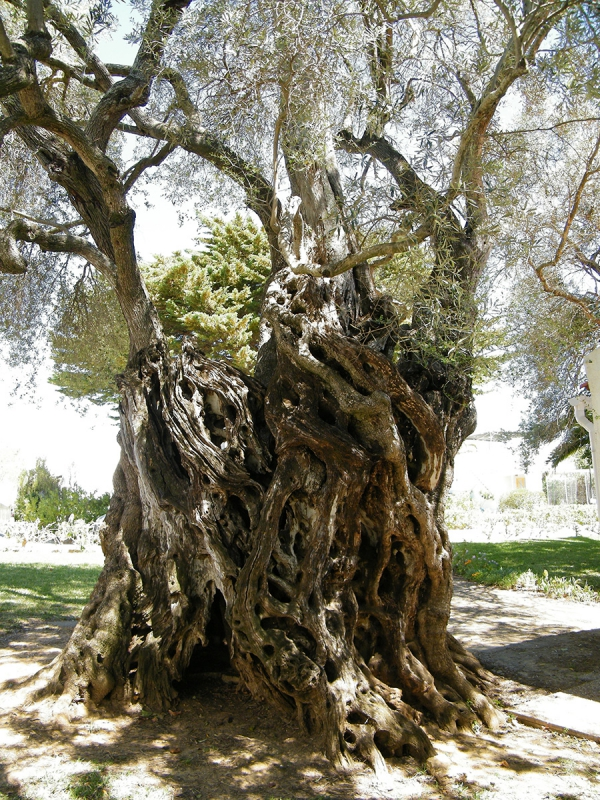
Every summer, as a kid, i used to visit an olive tree, majestic in her many twisted branches and wrinkled years, more than 2000, too many for humans being exact in their counting. Because which other being could live through so many generations, war and peace, hot summers and harsh winters, and still gently standing tall and with aspirations of moving towards the heavens, not with intentions of reaching them but just because that's what she sprouted to do, from a little forgotten seed? A passage opens at one side of her large trunk, leading to a little space inside this grandmother, an actual room withstanding gravity and all the odds, with a tiny carved table and stool. To enter the passage we need to bow a little, as if a sage entering a purposely designed Japanese tea house where the door forces humility. Perhaps there we could find a home, a home away from our vacant houses of mental categories; homeless of meanings.