Poetic naturalism
The world is magic. But its magic quality is its beauty without having magic, no reason and no creator. There is no miracle, the poetry lies in the fact that there was no reason in the first place, no fixed finality or guided map to make us who we are. And, nevertheless, here we are, evolved along billions of years into our incredible complexities and variety. Not separate, but part of nature itself.
Someone important once said that when the rain falls it never judges, water dropping the same way on top of everything. It fertilizes and destroys. The first rain of the monsoon that gives back the smile to the farmer, and the heavy rain clogging the streets and flooding our homes. Imagining a hand behind it steals all its innocence, beauty and cruelty.
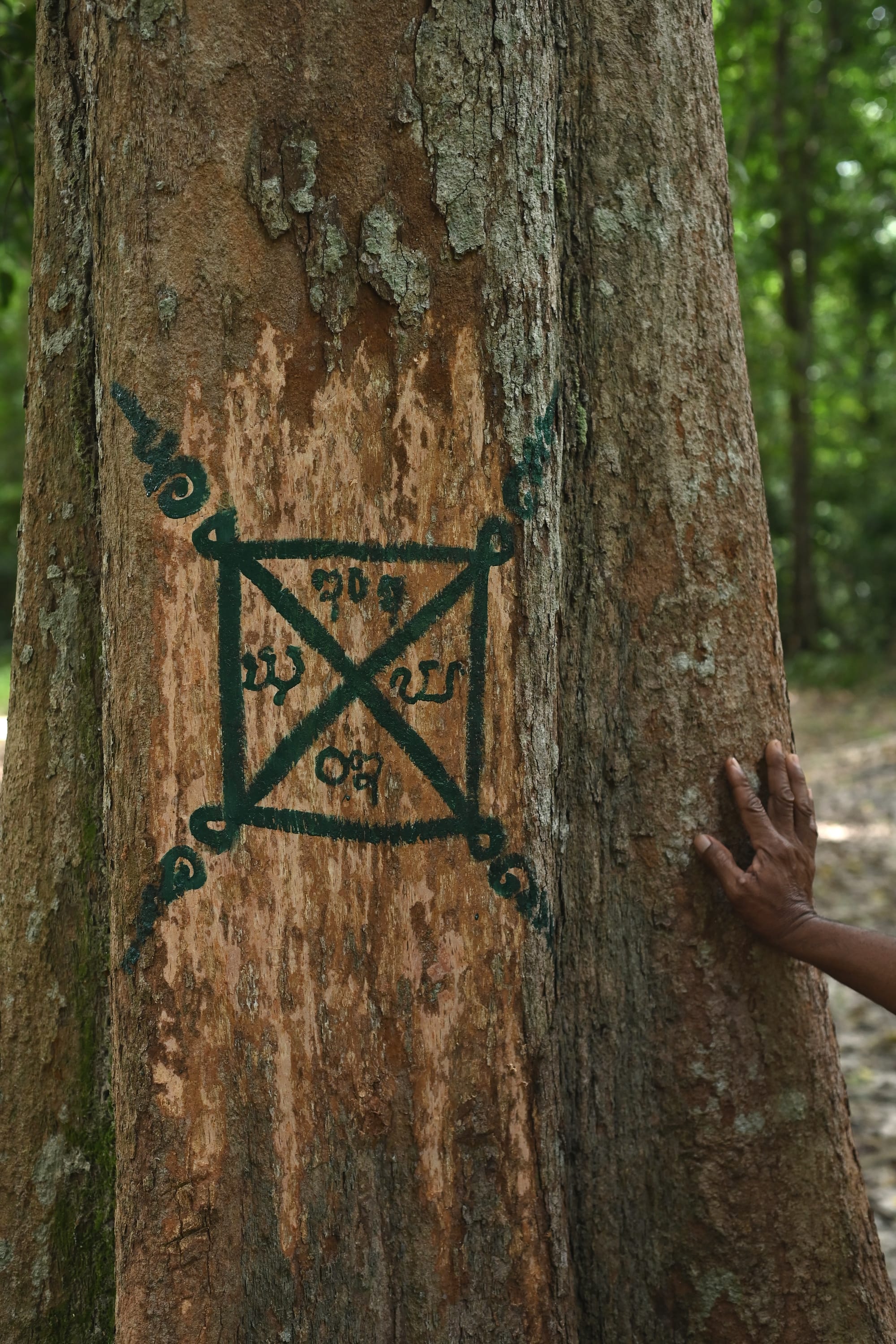
The only thing existing is nature, a god worshipped by indigenous people all around the world in a variety of ways. Call it animism, gaia for the deep ecologists out there, or just the simple idea that naturally emerged in so many different cultures: that every single living being has a life in it that we can't directly access, a reminder of the mystery of our world. The spirits in trees, the opaque personality in animals, the intricate complexity of the networks of cause-and-effect from where everything sprouts. The air we breath gifted by plants, the nutrients and information exchanged between all roots, the interconnected nature of the water cycle that everything feeds and nurtures. We are all entangled until the very core.
"The universe is made of stories, not atoms", a line by poet Muriel Rukeyser and popularized by physicist Sean Carroll, exemplifies this delicate dance between art and science, between the particles that compose our reality and the meanings we populate it with.
Here lies the poetry of nature, which is always sufficient and complete by itself. The cosmos gives us no meanings, but that's not a nihilistic view of the world – rather an empowering one: meaning, love, values are all human constructs, resulting from our own creativity and will-to-become.
What if we talk of soil instead of soul?
Something alive and ever changing, fertilizing our shared existence, instead of an immutable eternal concept only present in abstraction. The desire we feel in the flesh, the sap running in the tree trunk, the compulsion of the bee looking for a flower. Nature expresses herself through desire, the hunger to exist, the blood that make us being part of the whole. The intrinsic laws of nature that secretly coordinate our ways of thinking, feeling, being.
We are the stories and we are the co-creators. As real as the atoms that make planets and stars and animals and plants and fungi and bacteria. Naturalism and materialism do not mean this world is mechanical and bland, it means is made of flesh and bone, sap and microbes. It's not made of only science but also poetry. The atoms of our being are made of every single experience, sensation, encounter with others and the affects we shared, they are the same atoms we exchange with every tree or plant we pass nearby, the cat we pet and the person we talk to. The divinity Spinoza once talked about, divided between passive god for the atoms that compose our world and the active god that emerges from all the laws of nature, interactions and compulsions, that make the world the way it is.
If we listen to the masters, there is no way we would feel separate from all the nature around us. A lesson indigenous people have been telling us since the beginning of time...