Prey Ahret
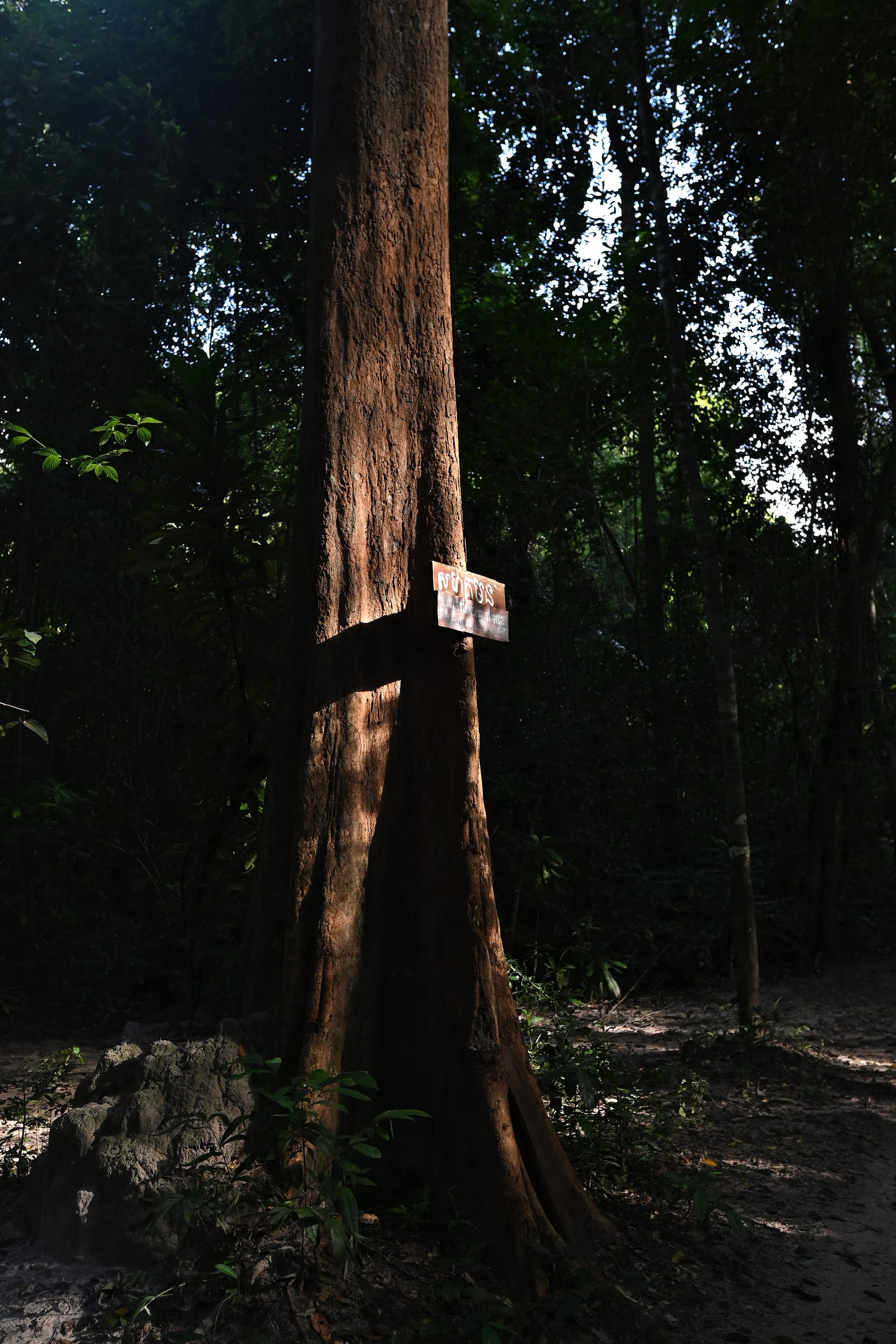
Can traditional spiritualities function as a tool for preserving nature? A practical medicine to fix the current plight of forests all around the world and resist the pressures of human activities, not through outsiders bringing new technologies or methodologies but, instead, looking back to what was once there, sprouting since ancestral times.
Although indigenous people represent about 5% of the world’s population, they might help protect 80% of all biodiversity, with more than 370 million individuals living in more than 90 countries and caring for one quarter of the planet in better ways than the rest of the population does. Cambodia is one of the oldest of these nations, with 24 indigenous groups representing 1.4% of its total population. Among them, the Kui stand fiercely in the current ebbs and flows between rapid development and protection of an already fragile land and its multiple tapestries of ecosystems and livelihoods that depend on them.
Although not currently known for how long they lived on these lands, some speculate since the second century, the Kui live in the forests of central Cambodia, northeast Thailand and south Laos. With an estimation of 380.000 people, 23.000 in Cambodia alone (Lefebvre, 2000), they’re mostly dedicated to farming according to regenerative rotational methods, sustainably collecting non-timber products in nearby forests such as mushrooms, resin and wild fruits, while still applying their crafting skills such as basket weaving and tool making. While pressured by land grabbing from mining companies and rubber or cashew plantations, and the constant governmental removal of any mentions to indigeneity in the land law: the centralized power prefers to call them minority groups to avoid any responsibility in acknowledging their existence in these territories prior to any conception of Khmer polity such as Funan, Chenla or Angkor empires. Therefore the Kui are being pushed towards the city, replacing sovereignty and natural survival with labour work, forced migration to nearby countries and continued invisibility.
But once they were kings and queens of this land. Similar to nearby ethnic groups in the region, partially described as Zomia (Schendel, 2002) and included in the influential The Art of Not Being Governed: An Anarchist History of Upland Southeast Asia (Scott, 2009), they lived autonomous and semi-isolated lives, sustained by the abundance of Prey Lang, the central forests in Cambodia, all the way to what constitutes now Isaan province in Thailand. On that side of the border they became expert mahouts, elephant hunters/domesticators, a skill later exploited by the colonial powers of the Siamese empires. Example of this is the still common term for their ethnic group in Thai language: the Suay – people who pay tribute – a tax made of elephants, sweat from forced labor, blood and tears from the violence applied to dominate them into submission. On the Cambodian side, time and the specificities of the landscape, namely the minerals around Phnom Dek (Khmer for Iron Mountain) made them expert ironsmelters and ironsmiths, with complex rituals towards the forest spirits that sustain their animist spirituality. Asking permission to extract and expressing gratitude with offerings, energetic dances directed both upwards towards the ghost world, and downwards to press buffalo-skin balloons to increase oxygen levels of the burning furnaces. A spectacle for the masters, done in iron-rich secret locations within the sacred forest only accessible to selected members of each community. Dupaigne (1987) was one of the few adventurers who managed to access this world before it was gone in the 1950s due to cheap imports of French and Chinese metals, and orders from King Sihanouk on the Cambodian side (similar policies also followed on the Thai side) cutting access to the forest – especially around the area of Unesco site, and object of border conflict between the two nations until this day, the Preah Vihear temple.
But, for centuries, the Kui were the masters of iron: for agricultural tools, for weapons traded with the warriors of the Khmer empire, the jewelry used by its king (and believed to provide ‘inner iron’ to protect against a myriad of threats) to the metal clamps used in the construction of Angkor Wat. With degrees of purity almost reaching steel levels proven by recent chemical analysis, and the experience of a long history of working the metal that the forest and its spirits allow them to use, these pieces were fundamental to maintain the gigantic metropole standing in sandy lands with no foundations close to current city of Siem Reap (Khmer for defeated Siamese, another ever-present reminder of the conflicts between the two nations that go beyond the ancestral people living there beforehand.)
Now this iron-strength is gone. Replaced by too many decades of colonial presence, both French and Khmer, and the encroachment of the globalized system and the tycoons coming from Phnom Penh to exploit their natural resources, the Kui rely on vain attempts against this outsider ‘development’, from protests quickly silenced by the police or community-led cursing ceremonies against the rich and powerful, increasingly losing their identity after too many years of language decay (schools only teach in Khmer), discrimination and consequent will to accept the Khmerification of society and the leaders’ cynical interchangeable use of Khmer-Cambodian as if ethnic identity equals nationality (other groups facing the same fate, for instance the descendants of the former Champa empire, the Cham, being labeled Khmer Muslim instead.)
The remainings of a culture are left in the ground, in the holes of the once secret iron furnaces inside their sacred forests, metal slag and nostalgia shared by the elders for a tradition they were too young at that time to be allowed to see (the last chay, or iron master, passed away in early 2000s.) Nowadays they have to focus their attention towards the next-in-line for disappearance, mostly practices related to the forest that still feeds, houses and heals them. The medicinal plants they collect, some ethnobotanical accounts reaching 374 different species (Virapongse, 2006; Torreira-Garcia et al., 2016), or the resin from the Chheuteal tree, standing tall and being a precious family possession passing from generation to generation in the moment of marriage, its viscous blood being used both for making the torch used during the dark nights in more remote villages, to the waterproofness of rattan baskets to be able to carry liquids. Fire and water, every object storing the multiple polarities of the Kui existence. An identity at risk, powerless to fight against the surrounding land grabbing, and the brave fight they still try to put on, often through the most creative methods.
For instance, in Cambodia, 'ordaining' a tree with the iconic orange Buddhist robes functions as a poetic tool to protect it against illegal logging. As if cutting it would equal to killing a monk. With this local drive for looking for solutions, and due to me having been working with them in various community projects -- namely developing Kuipedia, a crowdsourced library of stories and articles written by Kui youth on their own culture and ancestral wisdom, using interviews with elders as a tool for intergenerational dialogue before the ones bearing the knowledge pass away -- I ended up proposing a new idea for using community art to signal to loggers the local motivation to protect the forest. With this in mind, this series of photos was developed in order to document what we did together, collectively with around 50 members of nearby villages.
The traditional Sak Yant tattoos are believed in Cambodia to protect the ones who have them inscribed on their bodies, with designs being created and blessed by a monk or spiritual leader in order to ‘charge’ them with protective power. In a time of rapid deforestation throughout the territory, this project aims to present a poetic representation of this need for conservation, using a millenary culture to engage indigenous and local communities in painting on trees the same patterns used on skin, a reminder of the fragility of the land's bodies and the current plight of our natural ecosystems. Done in collaboration with a Kui group along the border of Preah Vihear and Kampong Thom provinces, deep within the jungle where a group of elders who abandoned their villages to set up camp on the routes they kept seeing illegal loggers crossing with impunity.
The photos in this Rambling Rhizome address the intimate connection they feel with nature and its spirits, Prey Ahret in Kui language, and the relationship with their current struggle with land dispossession and cultural decay. A community between borders, of the forest area protected by their will to stand against, and the outsiders who come to violate their ancestral lands; of their animist belief system counterbalanced with Buddhism; of the bleak future brought by development and the fight for the survival of their own way of living.
How to return to Aeltey, the Kui word for holding hands, i.e. mutual aid, the collaborative mindset used in agriculture or building each other's homes but, more crucially, in their way of living in harmony with nature?
Bibliography:
Emmanuel LEFEBVRE (2000), Estimated populations of Kuy in Cambodia
Willem van SCHENDEL (2002), Geographies of Knowing, Geographies of Ignorance: Jumping Scale in Southeast Asia
James C. SCOTT (2009), The Art of Not Being Governed: An Anarchist History of Upland Southeast Asia
Bernard DUPAIGNE (1987), Les maîtres du fer et du feu; étude de la métallurgie du fer chez les Kouy du Nord du Cambodge
Arika VIRAPONGSE (2006), Ethnomedicine and materia medica used by Kui traditional healers in northeast Thailand
Nerea TURREIRA-GARCIA, Dimitrios ARGYRIOU, CHHANG Phourin, Prachaya SRISANGA & Ida THEILADE (2016), Ethnobotanical knowledge of the Kuy and Khmer people in Prey Lang, Cambodia