Smells Like Kin Spirit
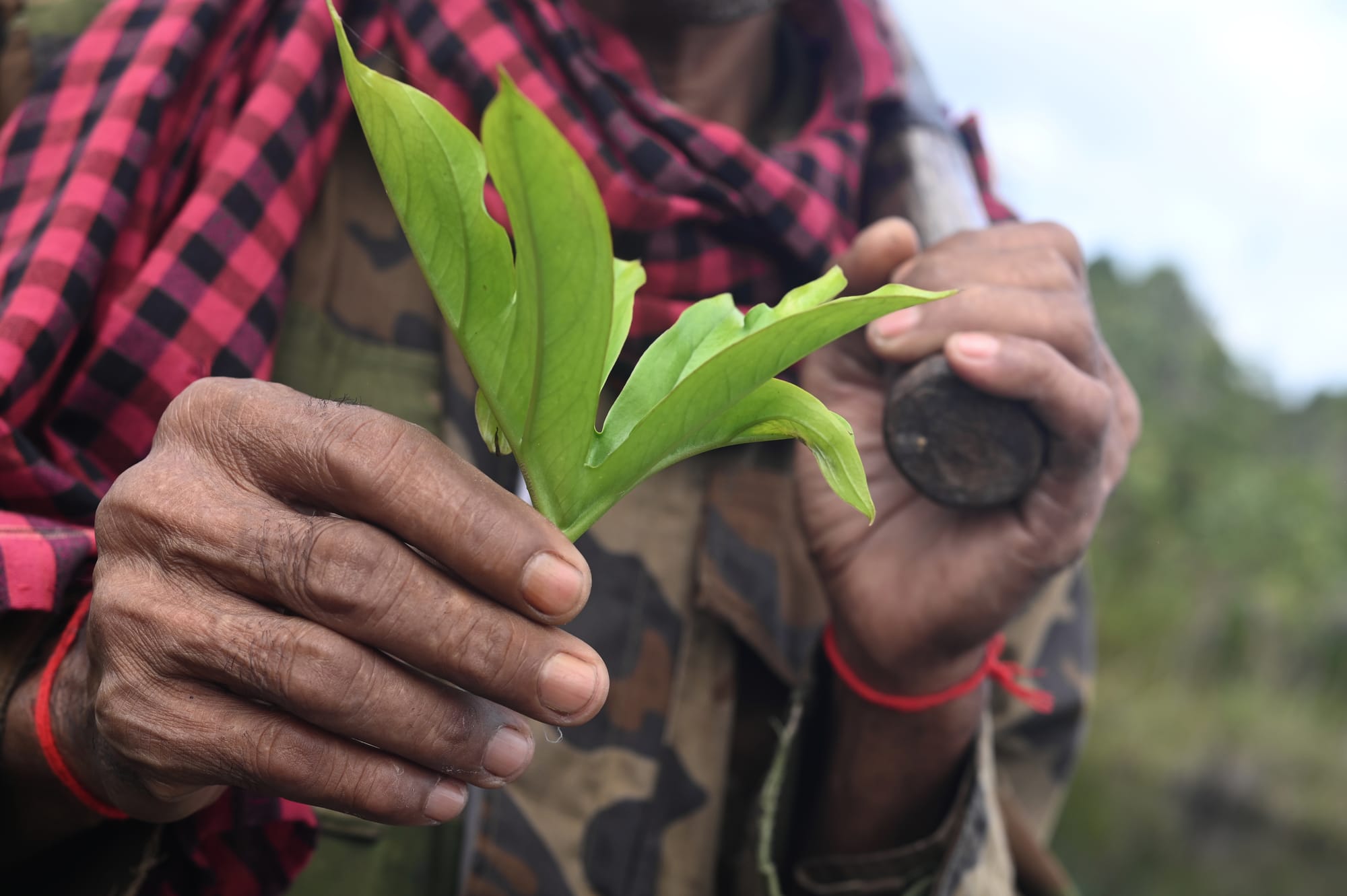
Kui people, one of the main indigenous groups from Cambodia, have always lived in deep harmony with their surrounding environment. Through a blend of spirituality, with their belief in the forest spirit, but also through carefully crafted and mutually beneficial relationships with all living beings. Entire families' livelihood depend on collecting natural products such as resin and medicinal plants, motivating them to protect and worship our ancestral world and tend to its trees as if close members of their own family.
Looking to the nature around us, what kind of relationship can we create with its plants, what deep connection can we find to the land? We are all kin. Related to each other, interdependent and small slices of the same planet. The lessons from the non-human world around us are many, if we just take time to listen. To see and touch the leaves, the soil, smell what nature has to whisper, an ancestral knowledge that screams to the ones who care to pay attention: we are all one.
Brings to mind this quote...
“Children, language, lands: almost everything was stripped away, stolen when you weren’t looking because you were trying to stay alive. In the face of such loss, one thing our people could not surrender was the meaning of land. In the settler mind, land was property, real estate, capital, or natural resources. But to our people, it was everything: identity, the connection to our ancestors, the home of our nonhuman kinfolk, our pharmacy, our library, the source of all that sustained us. Our lands were where our responsibility to the world was enacted, sacred ground. It belonged to itself; it was a gift, not a commodity, so it could never be bought or sold. These are the meanings people took with them when they were forced from their ancient homelands to new places.
(...)
Action on behalf of life transforms. Because the relationship between self and the world is reciprocal, it is not a question of first getting enlightened or saved and then acting. As we work to heal the earth, the earth heals us. (...) Know the ways of the ones who take care of you, so that you may take care of them. Introduce yourself. Be accountable as the one who comes asking for life. Ask permission before taking. Abide by the answer. Never take the first. Never take the last. Take only what you need. Take only that which is given. Never take more than half. Leave some for others. Harvest in a way that minimizes harm. Use it respectfully. Never waste what you have taken. Share. Give thanks for what you have been given. Give a gift, in reciprocity for what you have taken. Sustain the ones who sustain you and the earth will last forever.” ― Robin Wall Kimmerer, Braiding Sweetgrass: Indigenous Wisdom, Scientific Knowledge, and the Teachings of Plants